Commercial buildings rely on multiple plumbing systems working together to maintain safe, functional, and code-compliant environments. While these systems are typically concealed behind walls and below floors, they are essential to everyday operations. Read on for an overview of the four types of plumbing systems that can be found in most commercial buildings.
1. Domestic Water Systems (Potable Cold and Hot Water)
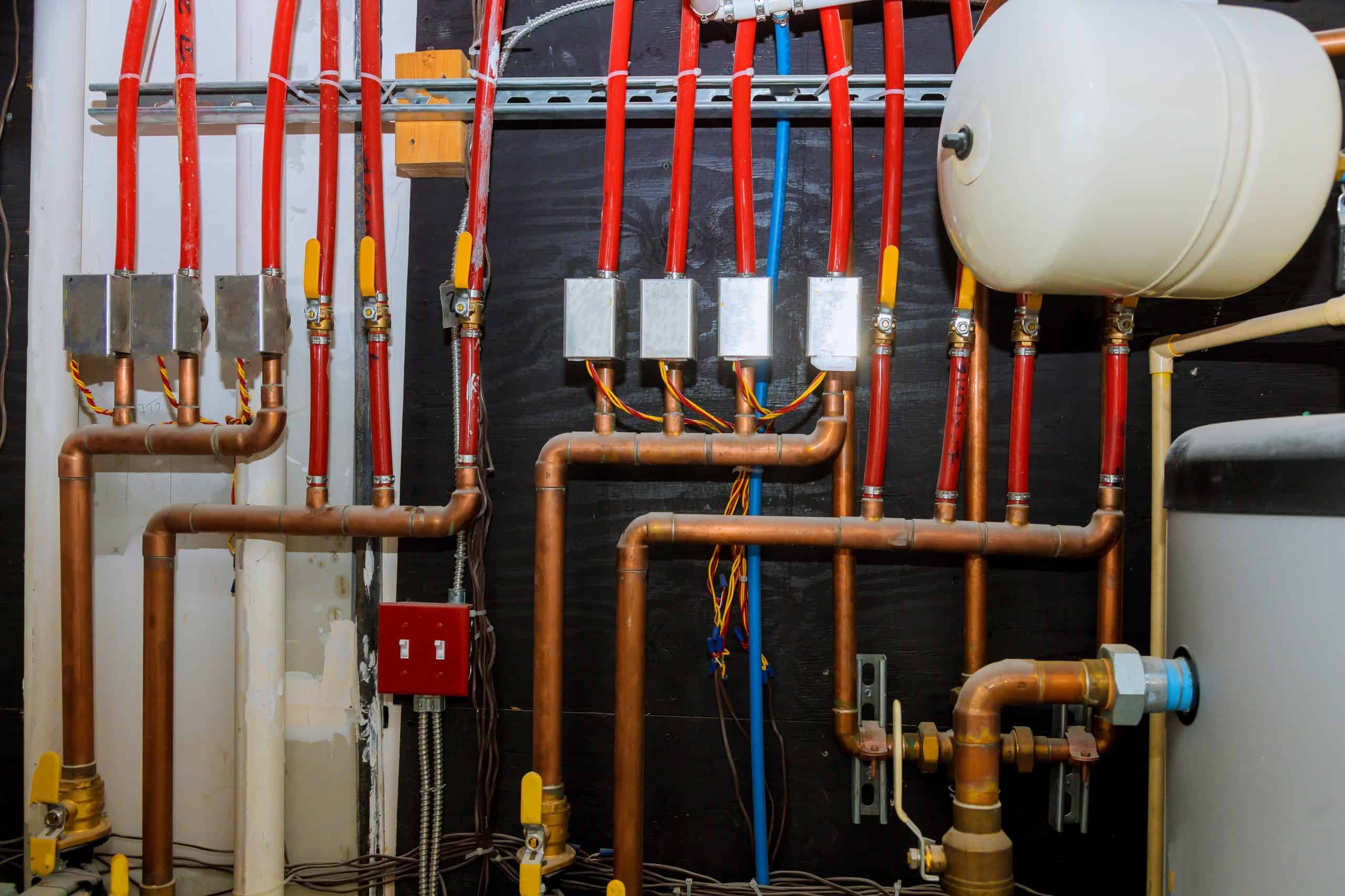
Domestic water systems supply clean, potable water throughout a building. The system begins at the municipal water connection or private well and is distributed through a network of pipes to fixtures such as sinks, showers, toilets, and appliances. Cold water is delivered directly from the main supply, while hot water is produced by centralized or localized water heaters. In larger commercial buildings, hot water systems often include boilers, storage tanks, and recirculation loops to maintain consistent temperature and reduce wait times at fixtures. Pressure regulation, backflow prevention, and filtration are critical components in ensuring water safety and system reliability. These safeguards help prevent contamination of the potable supply and ensure compliance with health and plumbing codes.
2. Sanitary Drainage Systems (Wastewater Removal)
Sanitary drainage systems are responsible for removing wastewater generated by plumbing fixtures. This includes water from toilets, sinks, floor drains, and equipment. The system relies on gravity wherever possible, using sloped piping to direct wastewater toward the building’s main sewer connection or an on-site treatment system. Vent piping is a key feature of sanitary drainage; it allows air to enter the system, preventing vacuum conditions that could slow drainage or cause trap seals, which block sewer gases from entering occupied spaces, to fail. In commercial applications, sanitary systems are often more complex than residential ones due to higher usage rates and stricter code requirements. Grease interceptors may also be required in buildings with food service operations to prevent blockages and protect municipal infrastructure.
3. Stormwater Drainage Systems (Roof and Site Drainage)
Stormwater systems manage rainwater and melting snow, preventing water accumulation that could damage the building or surrounding site. On rooftops, drainage is typically handled through internal roof drains, scuppers, or gutters connected to downpipes. These systems direct water away from the roof surface to prevent ponding, leaks, and structural stress. At the site level, stormwater is managed through a combination of catch basins, underground piping, and drainage outlets. Many commercial sites also incorporate detention or retention systems to control the rate at which stormwater is released into municipal systems, reducing flood risk and environmental impact. Proper stormwater design is critical for long-term building performance and compliance with local regulations.
4. Natural Gas Systems
Natural gas systems supply fuel for heating equipment, water heaters, cooking appliances, and sometimes backup generators. Gas is delivered through a metered connection and distributed via dedicated piping to equipment throughout the building. Because natural gas is combustible, these systems require strict adherence to safety standards, including proper pipe materials, shutoff valves, pressure regulation, and leak detection measures. Ventilation is also essential for appliances that produce combustion byproducts. In commercial buildings, gas systems are often integrated with mechanical systems such as boilers and rooftop HVAC units, making coordination between trades essential during design and installation.
Together, these four plumbing systems form the backbone of commercial building infrastructure, with each playing a distinct role in maintaining occupant safety, operational efficiency, and regulatory compliance, while functioning as an integrated building service network.
Looking for a team to take the lead on your next project? At Pulse Construction, we’re committed to doing business with an honest, professional, and competitive approach – without compromising safety or schedules. Contact us today for all of your building needs.