For thousands of years, lumber has been used to construct everything from simple shelters to complex buildings, and it remains fundamental to construction despite the development of increasingly sophisticated building materials and systems. Lumber’s performance depends on far more than the species of tree it comes from; moisture content, grading, dimensions, grain characteristics, manufacturing methods, and intended application all influence how a piece of lumber will perform once incorporated into a building. Understanding these distinctions is essential when selecting lumber for structural, architectural, and finishing applications.
A Brief History of Lumber in Construction
Wood has been used as a building material since prehistoric times, with early structures relying on branches, logs, and other naturally available timber. As woodworking tools and construction techniques developed, timber framing became increasingly sophisticated, particularly in Europe and Asia, where large structural timbers were joined using techniques that remain influential in modern timber construction.
The development of mechanized sawmills and industrial forestry transformed the production and use of lumber during the 18th and 19th centuries. Standardized sawn boards made wood framing faster and more economical, contributing to the widespread adoption of light-frame construction in North America. Today, dimensional lumber and engineered wood products continue to build on this history, with modern grading systems, manufacturing processes, and structural design methods allowing wood to be specified with considerably greater precision.
From Timber to Finished Lumber
The process of producing lumber begins with the preparation of harvested logs for mechanical processing. At the sawmill, logs are sorted according to species, diameter, quality, and intended product, then debarked and sawn using cutting patterns selected to maximize usable material while accounting for the characteristics of the log. The resulting boards then must be dried, which reduces moisture content under controlled temperature and humidity conditions while limiting defects such as excessive checking, splitting, and warping. Drying also reduces the weight of the material and helps produce lumber suitable for modern building assemblies.
Once dried, lumber is surfaced to standardized dimensions and visually or mechanically graded. Grading evaluates characteristics such as knots, slope of grain, density, and other defects that can affect strength and serviceability. The resulting grade designation provides important information about the material’s structural capacity. In Canada, softwood dimensional lumber is commonly graded under the National Lumber Grades Authority (NLGA) system, with grades selected according to the structural requirements of the application. Species combinations and grade stamps also identify information such as the mill, certification agency, moisture condition, and applicable grading rules.
Types of Lumber and Uses in Construction
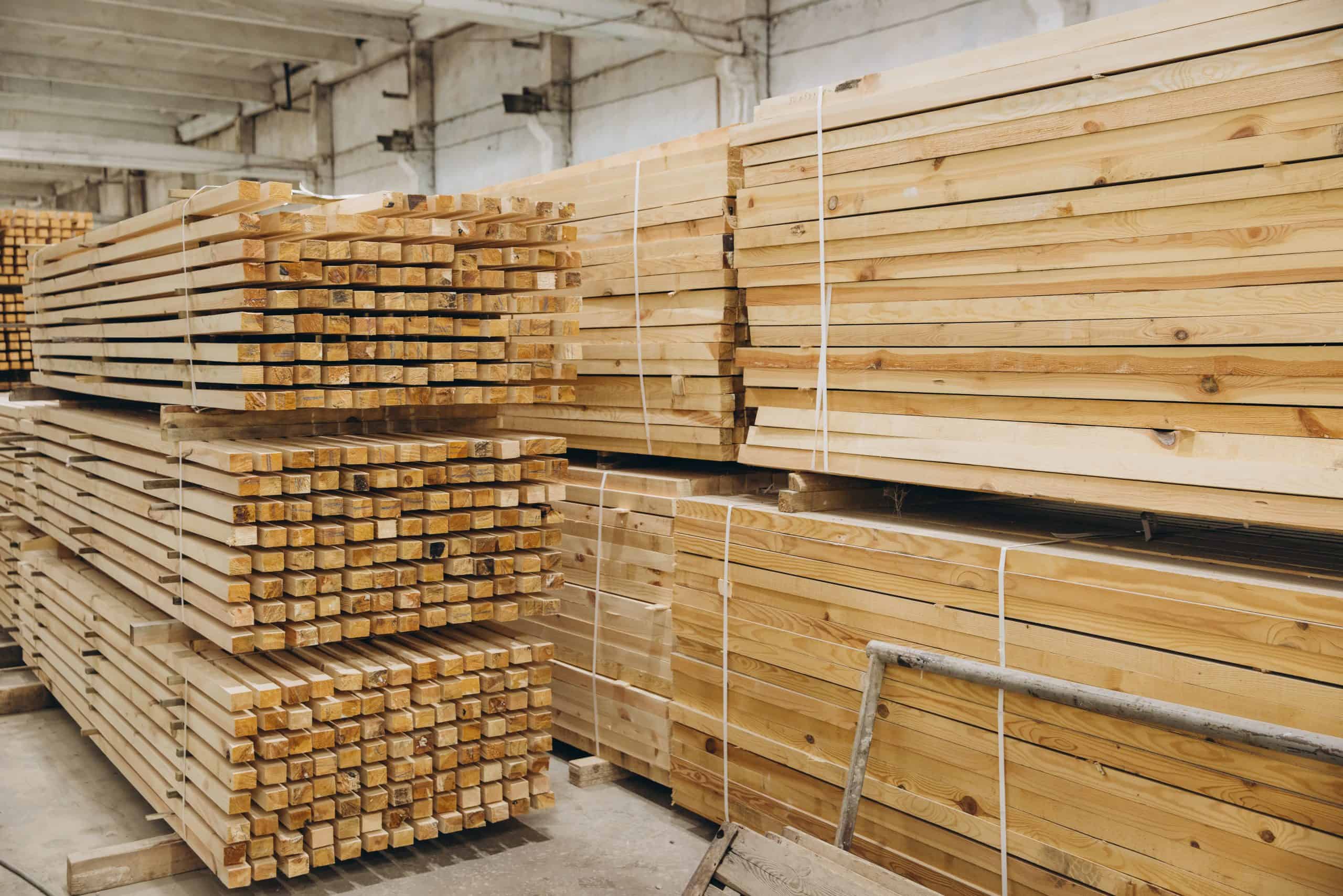
Construction lumber can broadly be divided into solid-sawn lumber and engineered wood products. Material selection must account for the conditions the lumber will encounter throughout its service life; factors such as moisture exposure, fire-resistance requirements, and compatibility with adjacent materials can all influence the appropriate product and grade. Dimensional lumber is widely used for conventional framing, whereas engineered wood products are manufactured to provide more predictable characteristics and to accommodate structural requirements that may exceed the practical limitations of solid-sawn lumber. Both structural lumber and engineered wood products form major components of walls, roofs, and other load-bearing assemblies, while appearance-grade lumber is used for flooring, millwork, cabinetry, doors, siding, and interior finishes. Specialized treatments can also allow wood products to be used in applications where resistance to decay, insects, or fire is a consideration.
Wood products provide a combination of structural efficiency, workability, and design flexibility. With advances in manufacturing further expanding the role of wood in contemporary construction, lumber is certain to be incorporated into increasingly complex structural and architectural applications. Its continued development will ensure that this longstanding material remains relevant to the changing demands of the built environment.
Looking for a team to take the lead on your next project? At Pulse Construction, we’re committed to doing business with an honest, professional, and competitive approach – without compromising safety or schedules. Contact us today for all of your building needs.