
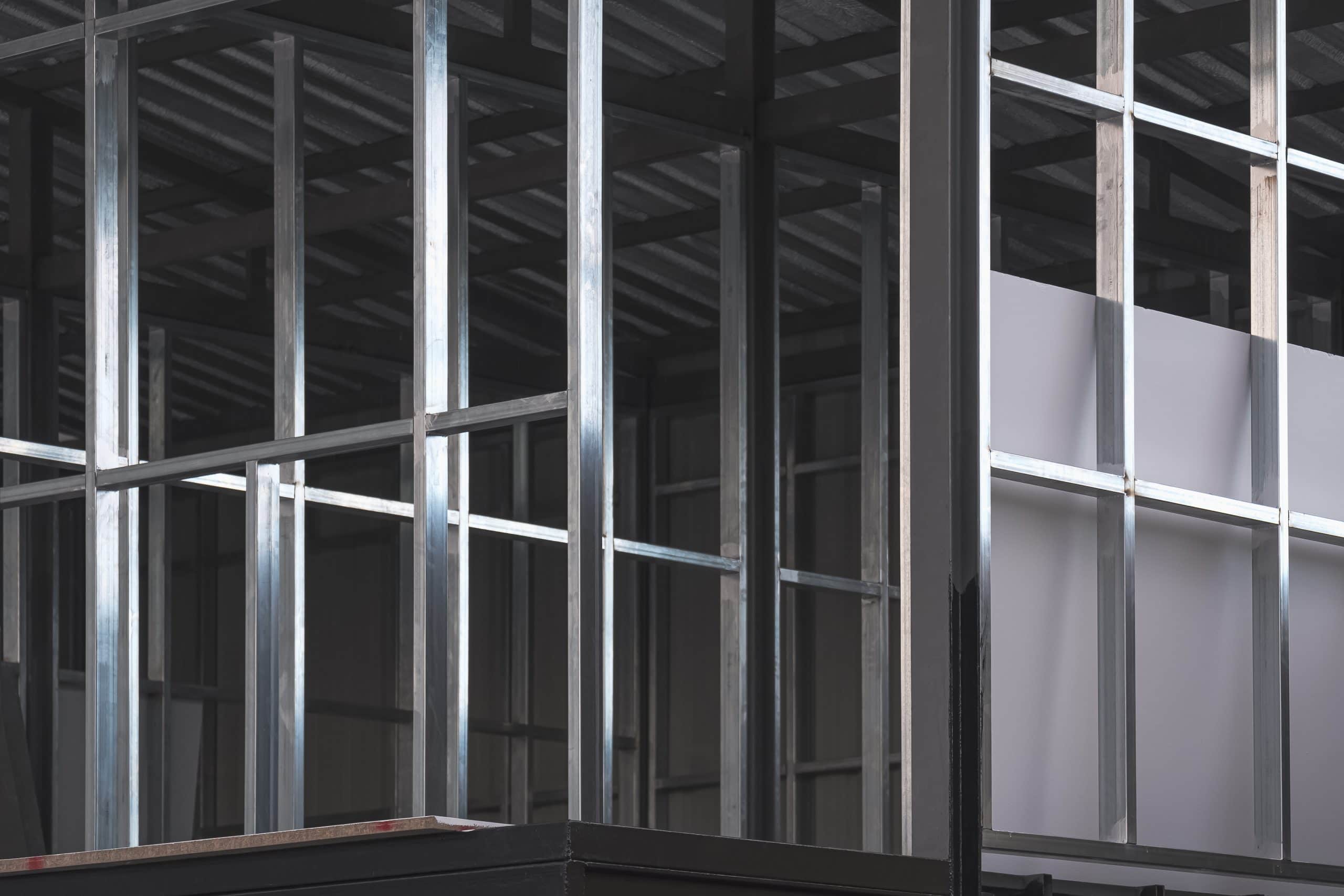
Previously, we explored the differences between load-bearing and framed structures, highlighting how each structural system supports a commercial building. Once a framed structure has been selected, another important decision follows: choosing the framing material itself. Two of the most common options are wood framing and steel framing, each offering distinct advantages depending on the project’s size, budget, and intended use.
Wood Framing
Wood framing is a popular choice because it is relatively economical, readily available, and straightforward to install. It is commonly used for low-rise commercial buildings, including offices, retail spaces, schools, and mixed-use developments. Wood’s lighter weight can simplify transportation and on-site handling, often allowing construction to progress quickly without specialized lifting equipment. It is also easy to modify during construction, making field adjustments less complicated than with fabricated steel components.
From a sustainability perspective, responsibly sourced lumber is a renewable resource and can contribute to lower embodied carbon compared to some other structural materials. Engineered wood products and mass timber systems have also expanded the range of commercial applications where wood framing can be considered.
Despite these advantages, wood framing has practical limitations. It is generally better suited to smaller buildings and shorter structural spans. It can also be affected by moisture, insects, and dimensional movement if not properly protected during construction and throughout the building’s service life.
Steel Framing
Structural steel is widely used for commercial, industrial, and institutional buildings where greater strength and flexibility are required. Because steel members can span longer distances while supporting heavier loads, they allow for larger open floor plans and fewer interior columns. Most structural steel components are fabricated off-site before arriving at the project, helping improve precision and reducing the amount of field fabrication required. This manufacturing process also supports quality control and efficient installation sequencing.
Steel offers excellent durability and is resistant to rot, insect damage, and warping. It also performs well in projects that may require future expansion or interior reconfiguration, as long-span structural systems often provide greater flexibility for changing tenant needs.
However, steel framing typically requires specialized equipment and experienced trades for erection. It can also involve higher upfront material costs than wood, although those costs may be offset by structural efficiency or reduced maintenance over the life of the building.
Choosing Between Wood and Steel
Neither framing material is inherently better than the other. The appropriate choice depends on the specific requirements of the project, including building height, occupancy, structural loads, schedule, budget, sustainability objectives, and local code requirements. Wood framing often provides an efficient solution for smaller commercial buildings, while steel framing is frequently selected for projects that demand longer spans, increased structural capacity, or greater design flexibility. Evaluating these factors early in the design process helps ensure the framing system supports both construction objectives and the building’s long-term performance.
Looking for a team to take the lead on your next project? At Pulse Construction, we’re committed to doing business with an honest, professional, and competitive approach – without compromising safety or schedules. Contact us today for all of your building needs.


Pingback: All About Lumber - Pulse Construction Inc.